
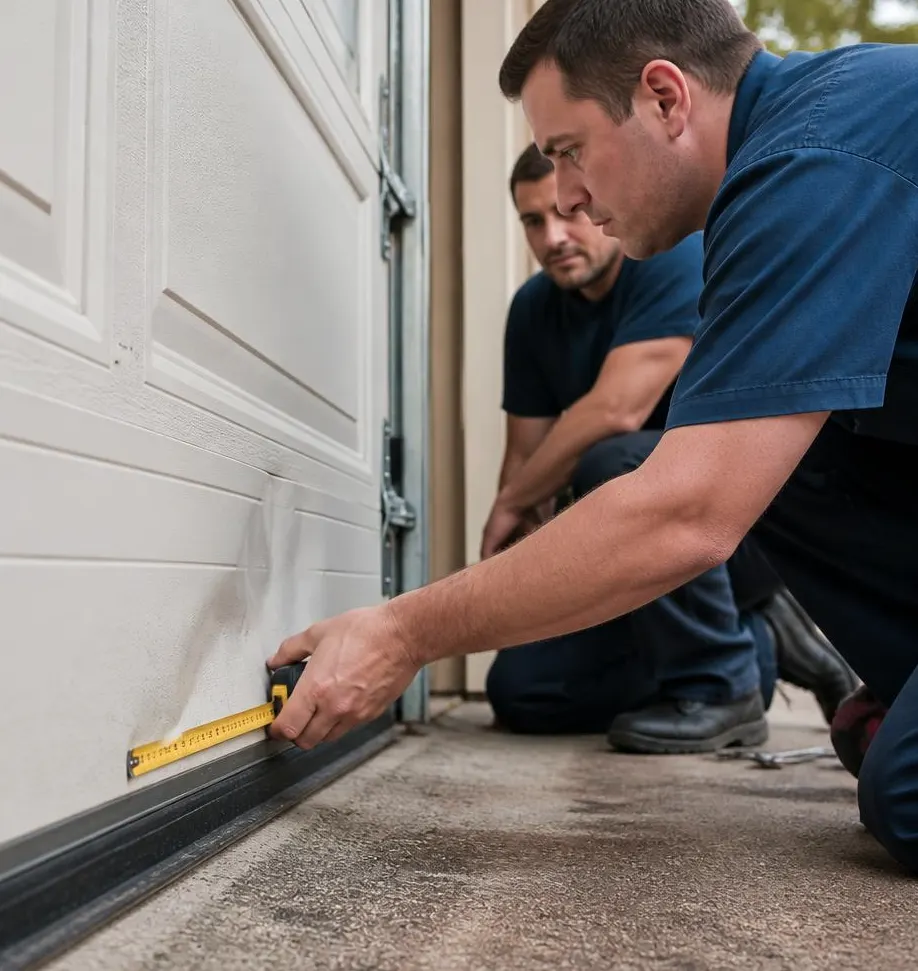
The Mistake Most People Try First
The first instinct when a garage door won't budge on a cold morning is to treat it like a frozen pipe — pour warm water over the tracks, or empty half a can of WD-40 onto every moving part, hoping to melt through whatever's holding it in place. It's an understandable reaction. The door genuinely feels frozen solid, and if you grew up further north, that's the fix you remember working. But Baker County mornings don't get cold enough, or stay cold long enough, to actually freeze a steel track. Even on a rare 28-degree morning, there's no ice to thaw. What's really happening has nothing to do with freezing, and spraying the wrong product on it can leave a gummy mess once the day warms back up.
What a Sluggish Door Actually Looks Like
- The door opens noticeably slower than usual, especially in the first few seconds
- There's a hesitation or stutter before it starts moving at all
- You hear grinding, scraping, or a higher-pitched whine from the opener motor
- The opener seems to strain, and the door reverses partway through closing
- Manual operation (with the opener disengaged) takes noticeably more muscle
- The door looks slightly crooked or uneven when it stops
None of these point to ice. They point to friction, tension, or alignment problems that cold weather simply makes more obvious.
Causes, in the Order a Technician Checks Them
1. Old or Wrong Lubricant
Grease and lubricant thicken as temperatures drop, and in a humid climate like ours, old lubricant also collects dust, pollen, and grit into a gummy paste that resists movement. This is the most common culprit and the easiest to fix. The repair involves wiping old buildup off the rollers, hinges, and springs with a mild degreaser, then applying a silicone- or lithium-based garage door lubricant — not WD-40, which is a cleaner and penetrant, not a long-term lubricant, and tends to attract more dirt over time. Tracks themselves should stay dry; lubricant belongs on the moving parts, not the track rail.
2. Spring Tension That's Lost Its Snap
Steel contracts slightly in cooler air, and a spring that's already fatigued from a summer of heat and humidity swings may show that wear for the first time on a cold morning. If the door feels heavy, closes too fast, or the opener groans on lift, tension is likely off. Spring adjustment or replacement is not a DIY job — these springs hold enough force to cause serious injury — and it's the point where a technician moves from lubrication to a proper spring repair.
3. Rust on Rollers, Hinges, or Track
Afternoon downpours and the lingering humidity from hurricane season leave a film of moisture on exposed hardware, and steel rollers or hinges can develop surface rust even without direct rain contact. Rust adds friction exactly where the door needs to glide. The fix is wire-brushing light rust off the hardware, swapping badly corroded steel rollers for nylon ones, and treating exposed metal with a rust inhibitor before it spreads.
4. Track Alignment Shifted by Moisture
Wood door frames and jambs absorb moisture during Florida's wet months, swell slightly, then contract as humidity drops going into cooler weather. That seasonal shift can nudge the track out of true by a fraction of an inch — enough to cause binding that feels like the door is stuck. A technician checks the track with a level, loosens the brackets, and re-shims or re-anchors them so the door runs straight again.
5. Opener Chain or Belt Tension
Temperature swings can loosen or tighten a chain-drive opener's chain slightly, and a sagging chain will jump or grind rather than running smoothly. This is checked against the manufacturer's tension spec and adjusted at the turnbuckle — a quick fix once it's identified.
6. Cables Showing Early Wear
Rust from humidity can fray a cable near the drum, and a stiff, resistant door puts extra strain on that weak point. A technician inspects the cables closely for fraying or kinking. If wear is found, the cable gets replaced — again, not a DIY repair, since these cables are under constant tension.
Why November Is a Good Time to Check This
Right now, Baker County is moving out of hurricane season and into the drier, cooler months, which is exactly when moisture that built up over the summer starts to show itself as rust, swelling, or stiff hardware. Catching a sluggish door now, before the colder snaps of December and January, is easier and cheaper than waiting for it to fail on a 35-degree morning.
When to Call Sanderson Garage Door Repair
If lubrication alone doesn't fix the sluggishness, or the door is reversing, grinding, or hanging crooked, it's time to call in a technician rather than keep testing it by hand. We offer Garage Door Tune-Up & Maintenance to catch rust, alignment, and lubrication issues before they become bigger problems, and Garage Door Spring Repair for the cases where tension loss is the real cause. We'll inspect the springs, rollers, cables, and track alignment, make the adjustment or replacement needed, and get the door moving the way it should.
If your garage door is sticking, groaning, or feels heavier than usual this fall, call Sanderson Garage Door Repair — proudly serving Sanderson, Macclenny, Glen St. Mary, Olustee, Lake Butler, Baldwin, Lake City, and Callahan, FL.